
Service / Statewide NC
Tree Removal and Storm Cleanup When a Tree Has to Come Down
Dead trees over a driveway, leaning pines near a shop, or a trunk across the fence after a storm. When a tree has to go, the job is to get it down and out of the way without adding damage to what is already there.
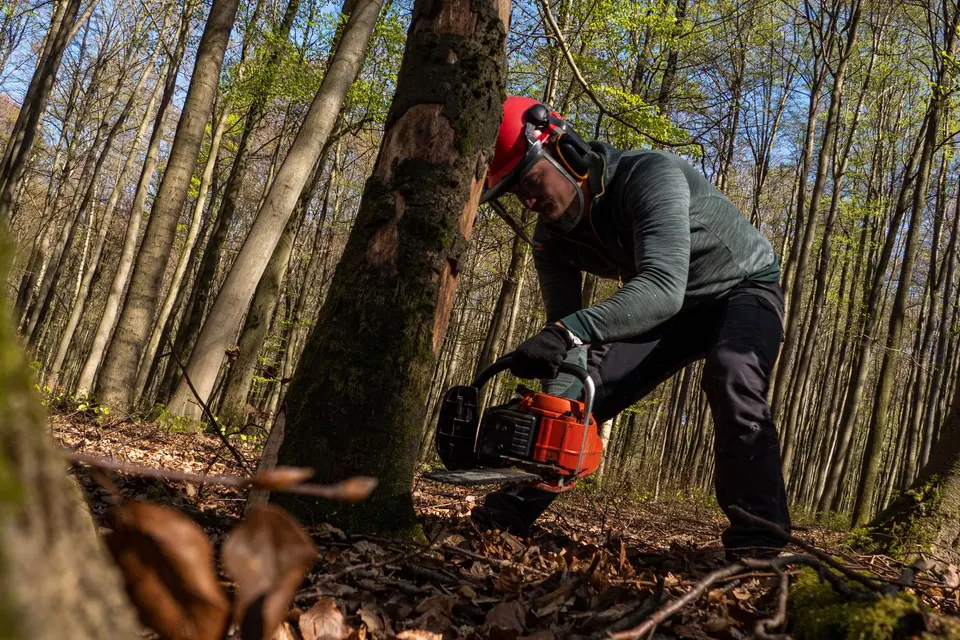
The kind of tree work we handle
Our tree work is land-focused: removing trees that are dead, dying, leaning toward something, crowding a building site, or blocking a view or a path. It also includes downed tree cleanup after storms, which in North Carolina can mean anything from a single pine on a fence to dozens of trunks tangled across a wooded lot.
We are a land contractor, not an arborist service, so our focus is removal and cleanup rather than ornamental pruning, cabling or tree health treatment. If a tree is worth saving and you want an expert opinion on its health, a certified arborist is the right call first.
Removals near houses and structures
Trees with open ground around them can often be felled in one controlled drop. Trees that lean over a roof, power drop, shop or fence usually need a more careful plan, which may mean taking them down in sections, using rigging to control where pieces land, or using a machine to steady and guide the trunk. Each tree is different, and we will be honest when a removal calls for a specialized climbing or crane service rather than ground-based work.
If a tree is touching or near a power line, stop and call the utility. Lines are their responsibility and only qualified line-clearance crews should work near them.
Storm debris and downed trees
After a storm, the priorities are getting driveways and access open, getting weight off of structures and fences, and then cleaning up the rest. Trees under tension from being bent or pinned can spring with surprising force when cut, so storm work is slower and more deliberate than a standing removal.
Debris can be cut and stacked as firewood length, piled, mulched, or loaded and hauled off. For homeowners working with insurance, take photos of the damage before any cleanup begins. We can work with what your adjuster needs to see.
What affects the quote
Size and condition of the tree are the starting point. Dead trees can be brittle and less predictable. Lean and what sits underneath, called targets, decide how carefully it has to come down. Access for equipment matters, especially in a fenced backyard or on a slope. The number of trees in a job changes the per-tree effort significantly.
Finally, decide what you want done with the wood. Leaving logs and brush on site is the lightest option. Cutting to firewood length, grinding the stump, mulching the brush or hauling everything away each add time. Tell us your preference and we will build the quote around it.
FAQ
Straight answers
Can you remove a tree close to my house?
Often, using sectional removal and rigging. Some removals over structures need a crane or climbing crew, and we will tell you plainly if that is the case.
Do you handle storm damage cleanup?
Yes. Downed trees, hung-up trunks, and debris cleanup after storms are part of our tree work. Photograph damage before cleanup for insurance.
Do you grind stumps after removal?
We can grind stumps below grade or leave them, depending on your plans for the area.
Will you work near power lines?
No. Contact your utility for anything touching or near a line. Once the line is safe, we can handle the rest of the cleanup.
Can I keep the wood?
Yes. We can cut trunks to firewood length and stack them where you want, or leave logs for you to process.
Ready when you are
Send the ground. Get a straight answer.
A few phone photos of the property and a rough idea of what you want it to become is enough to start. We will tell you what it takes, what it will not take, and whether we are the right crew for it.